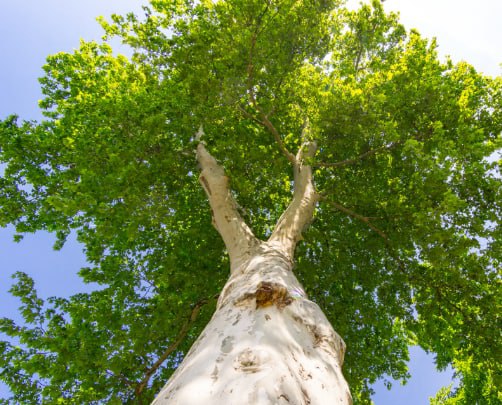
Tree removal is one of the most significant forms of tree surgery and should not automatically be the first response when a tree develops a problem. Many trees with overgrown branches, minor damage or manageable structural issues can continue to be retained with appropriate pruning, crown reduction or other professional tree care.
There are circumstances, however, where the condition of a tree has deteriorated to the point that retention becomes increasingly impractical. Extensive decay, major structural failure, severe decline or significant instability can all change the options available. Recognising these signs requires more than simply judging whether a tree looks old, large or untidy.
For property owners in Sheppy, Kent, a professional tree assessment can help distinguish between a tree that needs management and one where felling may be the more appropriate option. The decision should be based on the condition and structure of the individual tree rather than making assumptions from its size or appearance alone.
What Signs Can Indicate That Tree Felling May Be Necessary?
There is rarely one universal sign that means every affected tree must immediately be removed. Trees are complex living structures, and features that appear concerning can have very different implications depending on their location, extent, species and the overall condition of the tree.
Professional assessment considers the complete picture. The crown, trunk, major branches, visible root area, previous damage and surrounding environment can all provide useful information.
Where several significant defects occur together, or where an important structural part of the tree has deteriorated substantially, removal may become more appropriate than attempting repeated remedial work.
A Dead Tree Requires Careful Assessment
A tree that has died will no longer produce new healthy growth or respond to pruning in the same way as a living tree.
As dead wood deteriorates, branches can progressively weaken and the structural condition of the tree can change. The rate at which this occurs varies, so the condition of the individual tree still needs assessment.
Where a tree is confirmed dead and retention provides little practical benefit, felling may be appropriate.
A Bare Crown Does Not Automatically Mean the Tree Is Dead
The absence of leaves can sometimes cause unnecessary concern.
Deciduous trees naturally lose their leaves during part of the year, and individual species develop foliage at different times. A tree may also contain partial dieback while other sections remain alive.
The entire crown and tree condition should therefore be considered before concluding that a leafless tree requires removal.
Extensive Crown Dieback Can Be a Warning Sign
Crown dieback occurs when branches within the canopy begin to die.
A small amount of deadwood may be manageable through selective pruning. More widespread dieback, particularly when it continues through substantial parts of the crown, can indicate a more serious decline.
The extent and pattern of dieback help determine whether pruning remains appropriate or whether the tree requires broader assessment.
Repeated Branch Death Can Indicate Declining Condition
Occasional dead branches do not necessarily mean that a tree is failing.
However, when substantial branches continue dying across different parts of the canopy, it is useful to investigate why. Repeated dieback may indicate that the tree is struggling rather than experiencing one isolated branch problem.
Assessment can help determine whether sufficient healthy crown remains to justify continued management.
Major Trunk Damage Deserves Particular Attention
The trunk forms the central structural support of the tree.
Large wounds, extensive damaged areas or significant deterioration within the trunk can therefore be more important than a defect confined to a small branch. The position and extent of the damage matter greatly.
A professional tree surgeon can assess whether the remaining structure appears suitable for retention or whether removal should be considered.
Cavities Need Proper Interpretation
Hollows and cavities can look dramatic, but their presence alone does not automatically mean that a tree needs felling.
Some trees continue growing for considerable periods despite containing cavities. What matters is how much sound supporting wood remains, where the cavity is located and whether other structural weaknesses are also present.
The feature should therefore be assessed rather than judged solely by appearance.
Decay Can Affect Structural Strength
Decay can develop in trunks, branches or around the lower part of a tree.
Its significance depends on its extent and position. A small localised area is different from substantial deterioration affecting an important structural section.
Where decay has significantly compromised the tree’s supporting structure, felling may become one of the options that needs consideration.
Fungal Growth Can Be an Important Clue
Certain fungal fruiting bodies appearing around the trunk, roots or surrounding ground can indicate activity associated with wood or root decay.
However, identifying the implications from appearance alone can be difficult. Different fungi interact with trees in different ways, and the presence of fungal growth should not automatically be interpreted as proof that removal is necessary.
Professional assessment can consider the fungal growth alongside the condition of the tree.
Large Cracks in the Trunk Should Be Investigated
A substantial crack can indicate that parts of a trunk or major union are moving independently.
Its significance depends on depth, location and the surrounding structure. Some cracks may be longstanding features, while others can indicate more recent structural movement.
A noticeable new crack or one that appears to be increasing should not simply be ignored.
Splitting Between Major Stems Can Be Significant
Multi-stemmed trees can contain unions where large sections of the crown meet.
If a significant split develops between these stems, the structural relationship between major parts of the tree may be affected. The size of the stems and extent of the separation are important considerations.
Where the main framework has substantially failed, pruning alone may not provide an appropriate solution.
Weak Branch Unions Need Assessment
Not every branch joins the tree with the same structural arrangement.
Where two substantial stems or branches meet, the union should be considered as part of the overall tree structure. Visible movement, cracking or deterioration around an important junction can deserve closer attention.
The larger the supported sections above the union, the more important careful assessment becomes.
Sudden Leaning Can Be More Concerning Than a Natural Lean
Many healthy trees grow at an angle and have done so for years.
A longstanding lean does not automatically indicate instability. A tree that has recently changed position, however, presents a different situation.
A noticeable new lean, particularly after severe weather or ground movement, should be professionally assessed.
Raised Ground Around the Roots Can Indicate Movement
If a tree begins moving at root level, changes can sometimes become visible in the surrounding ground.
Soil may lift or crack around one side of the root area. This can indicate that the root plate has experienced movement.
Where these changes appear suddenly, the tree should be assessed promptly rather than assuming it will simply settle back into position.
Root Damage Can Influence Tree Stability
Roots provide both structural support and access to water and nutrients.
Significant damage to important roots can therefore influence the tree in several ways. The effects may not always become immediately obvious within the crown.
Where substantial root disturbance is known to have occurred, monitoring and professional assessment can help determine its significance.
Root Decay Can Be Difficult to See
Unlike a broken branch, deterioration below ground may not be readily visible.
Changes around the base of the tree, fungal growth or unexpected movement can sometimes provide clues, but the actual condition may require closer investigation.
This is one reason visual appearance alone cannot always determine whether a tree is structurally sound.
Storm Damage Can Change a Tree Very Quickly
A tree that appeared relatively stable before severe weather can experience significant structural damage during a storm.
Large limbs may split, the crown can become substantially unbalanced or movement may occur around the roots. The remaining tree needs assessment before deciding whether pruning can retain it.
Storm damage does not automatically require felling, but major structural failure can substantially change the available options.
One Broken Branch Does Not Usually Mean the Tree Must Be Felled
Trees occasionally lose branches without the entire tree becoming unsuitable for retention.
If the damage is confined to one part of the canopy and the remaining structure is satisfactory, selective pruning may be sufficient.
This illustrates why the extent of damage matters more than simply whether a branch has failed.
Several Major Branch Failures Can Indicate a Wider Problem
Repeated loss of substantial branches deserves more detailed investigation.
There may be weaknesses within particular unions, extensive deadwood or deterioration affecting a wider part of the crown. Treating every failed branch as an unrelated event can overlook the underlying pattern.
Assessment can determine whether continued pruning remains a sensible approach.
A Severely Unbalanced Crown May Need Attention
The loss of a large section of canopy can substantially alter the shape of a tree.
Whether the remaining tree can be retained depends on its structure, condition and the way the remaining branches are arranged. Further pruning may sometimes create a more appropriate crown.
In other cases, extensive structural loss may make long-term retention less practical.
Previous Heavy Pruning Can Influence Structure
Past tree work can have a considerable influence on current growth.
Heavy cuts can sometimes lead to vigorous shoots developing around old pruning points. As these shoots become larger, their attachment and arrangement may need assessment.
Understanding previous pruning helps explain why some mature crowns have developed unusual structures.
Repeated Pruning Cannot Solve Every Structural Problem
Pruning is extremely useful when the problem can be addressed by removing or shortening appropriate branches.
It cannot restore sound wood where major structural components have extensively deteriorated. Continually reducing the crown may also become increasingly unsuitable if the underlying problem remains unchanged.
At this stage, the wider future of the tree may need consideration.
Crown Reduction May Be an Alternative to Felling
Where the primary problem is excessive size rather than serious structural deterioration, crown reduction can sometimes provide a practical alternative.
Selected branches are shortened to decrease the overall height, spread or both while retaining the tree. This can help an oversized tree relate more appropriately to its surroundings.
The tree must still be suitable for the work, and the extent of reduction should be proportionate.
Selective Pruning Can Resolve Localised Problems
A tree should not be removed simply because several branches require attention.
Deadwood, damaged branches, crossing growth and individual overextended limbs can often be managed selectively. The majority of the crown may remain unaffected.
Professional assessment helps identify whether the problem is genuinely tree-wide or confined to specific branches.
Tree Size Alone Is Not a Reason for Felling
Large trees can naturally appear imposing.
A mature tree that has developed substantial height and spread is not necessarily unhealthy or unstable. If its structure and condition remain suitable, its size may be manageable through appropriate tree surgery where intervention is genuinely needed.
Decisions should not be based purely on height.
An Overgrown Tree Is Not Necessarily a Failing Tree
Growth is a normal characteristic of a healthy tree.
A canopy that has become too large for the available garden space may still be structurally sound. Selective pruning or crown reduction can sometimes address the practical issue while retaining the tree.
Felling should not automatically be chosen simply because routine management has been delayed.
Excessive Pruning Is Not Always a Suitable Alternative
Although retention should be considered where reasonable, pruning also has practical limits.
Attempting to retain a tree by repeatedly removing very large proportions of its crown may not provide an appropriate long-term management strategy. The tree’s likely response and remaining structure need to be considered.
Sometimes the desire to avoid removal can lead to interventions that are not particularly beneficial to the tree.
The Position of a Defect Matters
The same type of defect can have different implications depending on where it occurs.
A small damaged branch near the edge of the crown is very different from substantial deterioration within the main trunk or root area. Structural importance increases as defects affect major supporting components.
Professional assessment considers this context rather than simply counting visible defects.
Several Defects Together Can Change the Assessment
A tree may contain one cavity and remain suitable for retention.
Another tree may contain a cavity alongside extensive dieback, root deterioration and significant structural movement. The combination of factors creates a very different situation.
The complete condition of the tree should therefore be considered rather than focusing on one visible feature.
Progressive Deterioration Is Important to Recognise
Some tree problems remain relatively stable, while others continue developing.
If crown decline is increasing, structural cracks are becoming more pronounced or repeated branch failures are occurring, the changing pattern provides important information.
Comparing the tree’s current condition with how it appeared previously can help identify significant deterioration.
A Tree That Has Stopped Responding Well May Need Broader Assessment
Trees can sometimes show reduced vitality over an extended period.
Sparse foliage, repeated dieback and limited healthy growth may indicate decline, although these signs can have several causes. They should not be used independently to decide that felling is necessary.
When combined with significant structural deterioration, however, declining vitality may influence the overall assessment.
Tree Felling Can Sometimes Prevent Repeated Reactive Work
Where a severely deteriorated tree repeatedly loses branches or requires ongoing substantial intervention, continued reactive pruning may eventually become impractical.
At this point, it can be useful to consider whether management is addressing the underlying problem or merely responding to each new symptom.
A professional assessment can help determine whether retention still represents a reasonable approach.
Sectional Felling Can Be Used Where Space Is Restricted
Not every tree can simply be felled in one piece.
Where surrounding space is limited, tree removal can be carried out progressively. The crown and trunk can be dismantled in controlled sections rather than relying on an open area for the entire tree to fall.
The method used should reflect the tree’s position and its immediate surroundings.
Tree Felling Requires Careful Planning
Removing an established tree involves much more than making a cut at the base.
The tree’s size, structure, condition, direction of growth and available working space all influence the approach. Nearby garden features and access also need consideration.
Professional planning helps determine an appropriate method for the individual tree.
The Remaining Stump Should Also Be Considered
Felling removes the above-ground tree but normally leaves a stump unless further work is carried out.
Depending on the future use of the area, stump grinding may be considered afterwards. This can reduce the remaining stump below the surrounding surface and make the space easier to manage.
Tree removal and stump management are therefore related but separate operations.
Felling Should Be Based on Condition Rather Than Appearance
An old, hollow or unusual-looking tree is not automatically unsuitable for retention.
Likewise, a tree that appears healthy from a distance can sometimes contain significant structural deterioration that is not immediately obvious.
Professional assessment is valuable because it considers physical condition rather than relying solely on visual impressions.
Early Assessment Can Preserve More Options
Waiting until a tree has experienced major structural failure can limit the management choices available.
When changes such as increasing dieback, significant cracks or repeated branch problems are noticed earlier, an assessment may identify pruning or other management that remains appropriate.
Early attention does not necessarily mean the tree will need removing.
Professional Assessment Can Prevent Unnecessary Felling
One of the important roles of a tree surgeon is recognising when removal is not required.
A concerning-looking branch may be suitable for pruning, an oversized crown may respond to reduction, and isolated deadwood can often be removed without affecting the remainder of the tree.
Assessing alternatives helps ensure felling is recommended for the right reasons.
Professional Assessment Can Also Identify When Pruning Is No Longer Enough
The opposite is equally important.
Repeatedly pruning a tree with substantial structural deterioration may not address the main problem. Where critical parts of the tree have significantly weakened, removal may become the more appropriate management option.
A realistic assessment should consider both retention and removal rather than approaching the tree with a predetermined outcome.
Why Professional Tree Felling Adds Value
Determining whether a tree should be removed requires an understanding of much more than its height or appearance. Crown condition, major branch unions, trunk defects, visible root conditions, decay, previous pruning and signs of movement may all influence the decision.
At Sheppey Tree Surgeons, we assess the individual tree before recommending the appropriate approach. Where pruning, crown reduction or another form of tree management remains suitable, complete removal may not be necessary. Where deterioration is sufficiently extensive, professional felling can be planned according to the tree’s condition and surroundings.
For trees in Sheppy, Kent, this condition-led approach helps ensure that tree removal is considered proportionately rather than treated as the automatic response to every defect.
Knowing When to Retain and When to Remove Is Important
Good tree management involves both decisions.
Retaining a tree through appropriate pruning can preserve an established feature when its condition allows. Equally, continuing to manage a severely deteriorated tree indefinitely may not always be practical.
The important question is not simply whether the tree has a defect, but what that defect means for the tree as a whole.
Conclusion
Signs that a tree may require felling include extensive crown dieback, substantial trunk decay, serious cracking, major stem separation, significant root movement and widespread structural deterioration. Repeated large branch failures or a combination of several important defects can also indicate that continued pruning may no longer provide an appropriate solution.
However, none of these signs should be considered entirely in isolation. Cavities, dead branches, a natural lean or an overgrown crown do not automatically mean that a tree needs removing. In many situations, selective pruning, deadwood removal or crown reduction may allow the tree to remain.
If you are concerned about the condition of a tree at your property in Sheppy, Kent, contact Sheppey Tree Surgeons. We can assess the tree and determine whether appropriate pruning can retain it or whether professional tree felling should be considered based on its actual condition.
Call us on: 01795 718 597
Click here to find out more about Sheppey Tree Surgeons
Click here to complete our contact form and see how we can help with your tree needs.